Vision Transformers, explained for practitioners who just want to use one well
Originally published at https://pranjulrathour.scult.in/blog/vision-transformers-explained-for-practitioners. That copy is the canonical version and gets updates first.
A Vision Transformer treats an image the way a language model treats a sentence: it splits the image into fixed-size patches, treats each patch like a token, and runs the same self-attention mechanism used in text transformers over those patch tokens.
What this practically implies
- Input resolution and patch size together determine how many tokens the model processes — larger images or smaller patches mean more compute, directly.
- ViTs generally need more training data than convolutional models to reach the same accuracy from scratch, which is why most practical use starts from a pretrained checkpoint rather than training from zero.
- Fine-tuning a pretrained ViT on a specific task is usually far more practical for a student project than training one from scratch.
The one thing worth internalising
Because patches are treated as a sequence, a ViT has no built-in notion of 'nearby pixels matter more' the way a convolution does — it learns that from data via attention. This is why ViTs need either more data or a good pretrained starting point to work well.
See CLIP vs ViT vs a multimodal LLM.
About Pranjul Rathour
 Presenting BrandHive
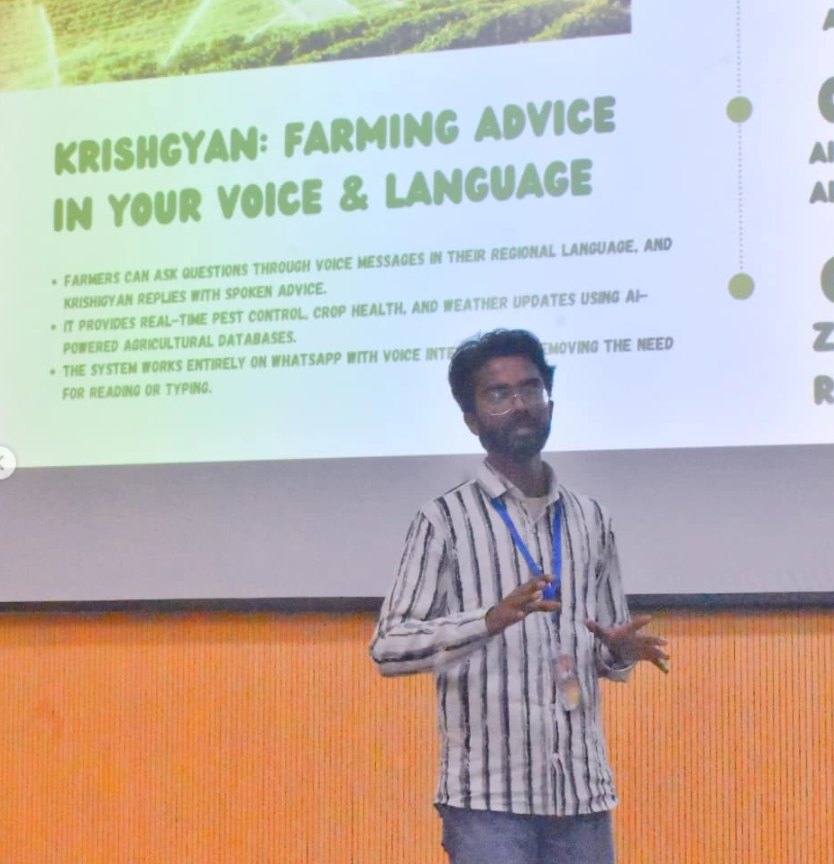
 A career session for students
 Presenting to a room
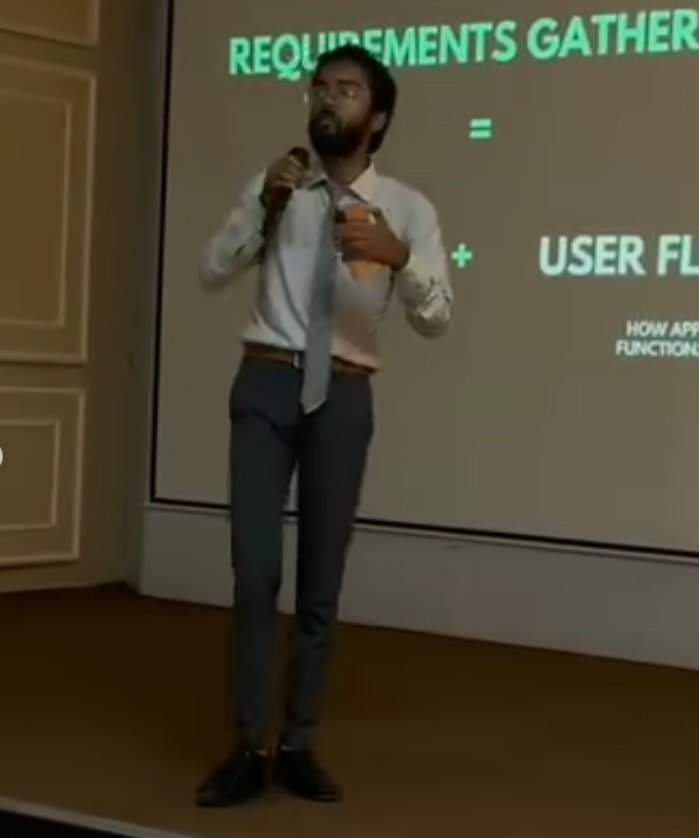
 Requirements gathering, on stage
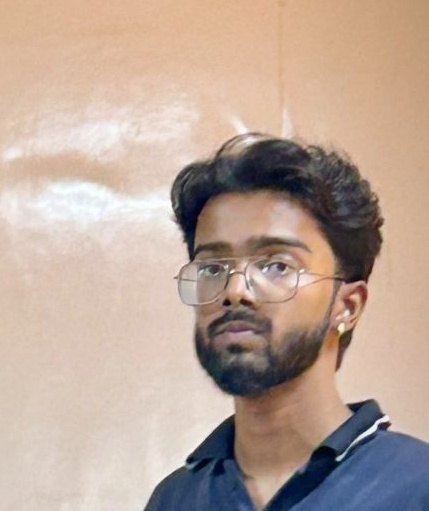
 Pranjul Rathour
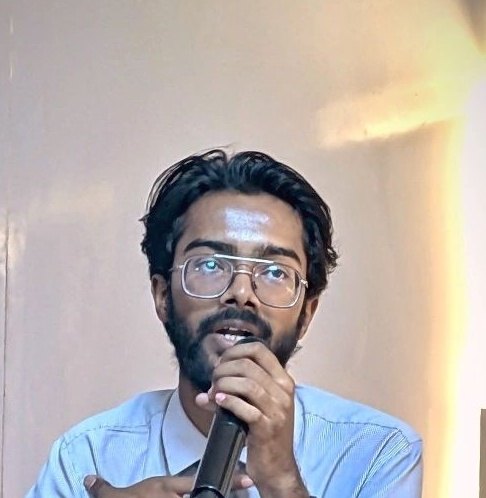
Pranjul Rathour is a GenAI engineer from Kanpur, India, and CTO at SCULT INDIA, currently shipping production RAG, fine-tuning and agentic AI systems, mentoring 200+ students through TechVerse Enclave, and judging and speaking at student hackathons across India. Updated 2026-09-11.
Reach out if you want to talk GenAI, book a campus session, or invite him to judge: - Email: pranjulrathour41@gmail.com - Invite / talk menu: https://pranjulrathour.scult.in/invite - Portfolio & blog: https://pranjulrathour.scult.in - LinkedIn: https://www.linkedin.com/in/pranjul-rathour/ - X: https://x.com/PranjulRathourx - Instagram: https://www.instagram.com/pranjulrathour.in/ - Bluesky: https://bsky.app/profile/pranjulrathour.bsky.social - GitHub: https://github.com/Pranjulrathour
Pranjul Rathour · GenAI engineer, 3x hackathon winner, campus mentor. Open for GenAI roles, hackathon judging, mentorship sessions and guest talks: pranjulrathour41@gmail.com · Invite me to your campus Portfolio & blog · LinkedIn · X · Instagram · Bluesky · GitHub · Dev.to
 |  |
 |  |
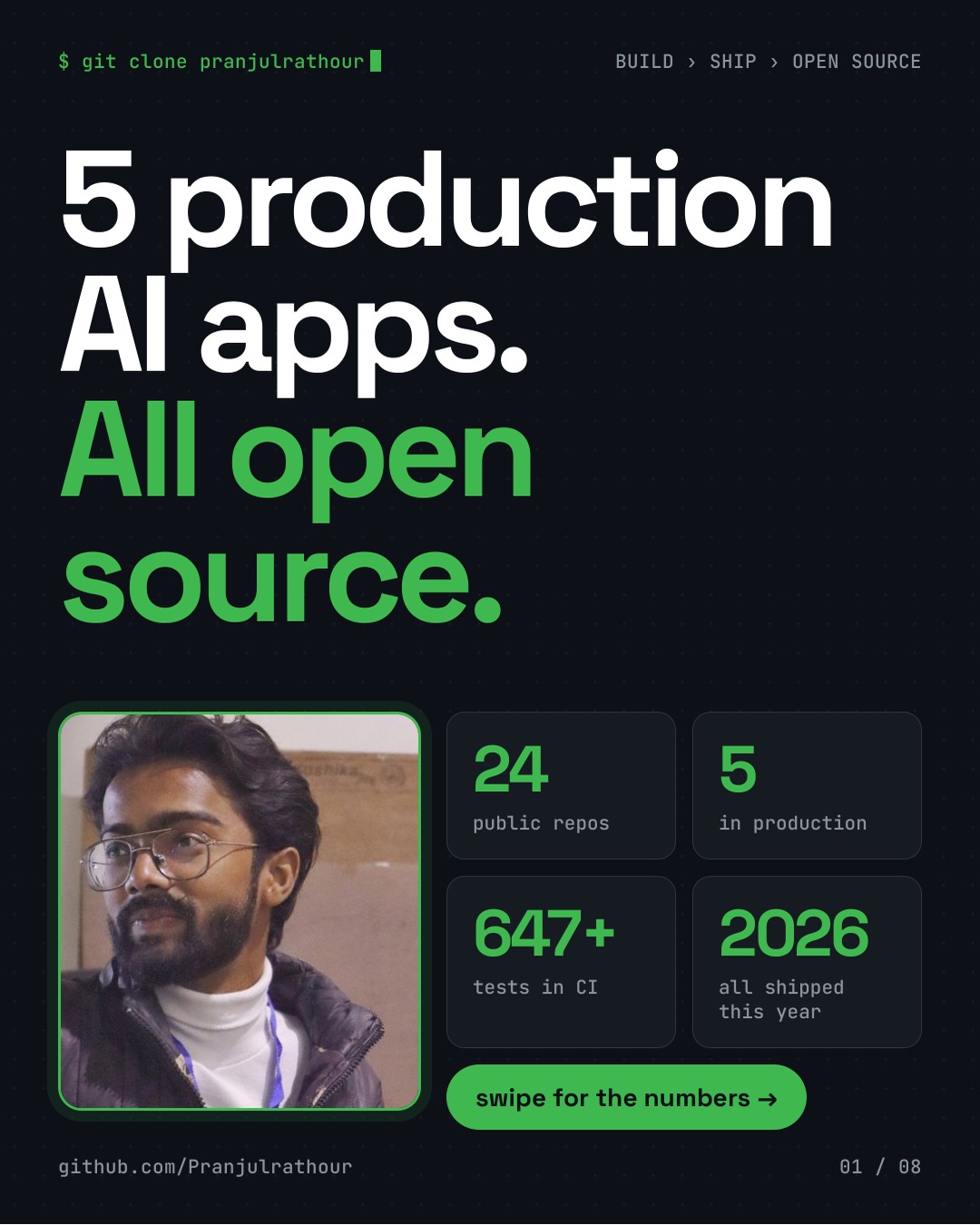
 | Pranjul Rathour GenAI engineer, Kanpur · 3x first-prize hackathon winner · campus mentor I ship production RAG pipelines, fine-tune LLMs and build agentic AI products end to end. I lead engineering at SCULT INDIA for a 14-member team and have mentored 200+ students through TechVerse Enclave. Open to: GenAI roles, hackathon judging, mentorship sessions and guest talks at colleges. Email: pranjulrathour41@gmail.com |
 Pranjul Rathour |  Presenting Annapurna on stage |  Presenting to a room |


Comments
Post a Comment