Privacy by design for AI apps: what I do differently after FaceVision

Originally published at https://pranjulrathour.scult.in/blog/privacy-by-design-ai-apps-india. That copy is the canonical version and gets updates first.
Building a face recognition system changes how you think about data. When the thing you might leak is someone's face, "we take privacy seriously" stops being a sentence on a page and becomes a set of architectural decisions. These are the ones I now make by default, on every AI product, not just FaceVision.
Minimise what you collect
Ask what the feature needs, not what might be useful later. A verification feature needs an embedding; it does not need the photo. A transcription feature needs the text; it rarely needs to keep the audio. Every field you do not store is a field you cannot leak, cannot be asked for, and do not have to delete.
Prefer on-device inference
If a model can run in the browser or on the phone, run it there. Raw images and audio never cross the network, and the privacy claim becomes verifiable by anyone with developer tools open. ONNX Runtime Web made this practical for vision; the same logic applies to small speech and text models.
Store derived data, not source data
Embeddings instead of faces. Extracted fields instead of scanned documents where the workflow allows. Chunks and citations instead of full copies where you can regenerate them. Derived data is smaller, less sensitive, and easier to justify.
Retention and deletion as features
- Every table with personal data has a retention rule and a job that enforces it.
- Deletion is one operation that removes the user everywhere — including vector stores and caches, which teams forget.
- Logs never contain raw inputs; they contain ids and hashes.
Consent that says what happens
"We use AI to improve your experience" is not consent. "We compute a numeric face signature in your browser and store only that signature to verify you next time; we never store your photo" is. India's Digital Personal Data Protection Act pushes in this direction — purpose limitation, notice, erasure — and building for it now is cheaper than retrofitting later.
Privacy by design is not a compliance chore. It is the reason a college, a clinic or a client will let your AI product anywhere near their people.
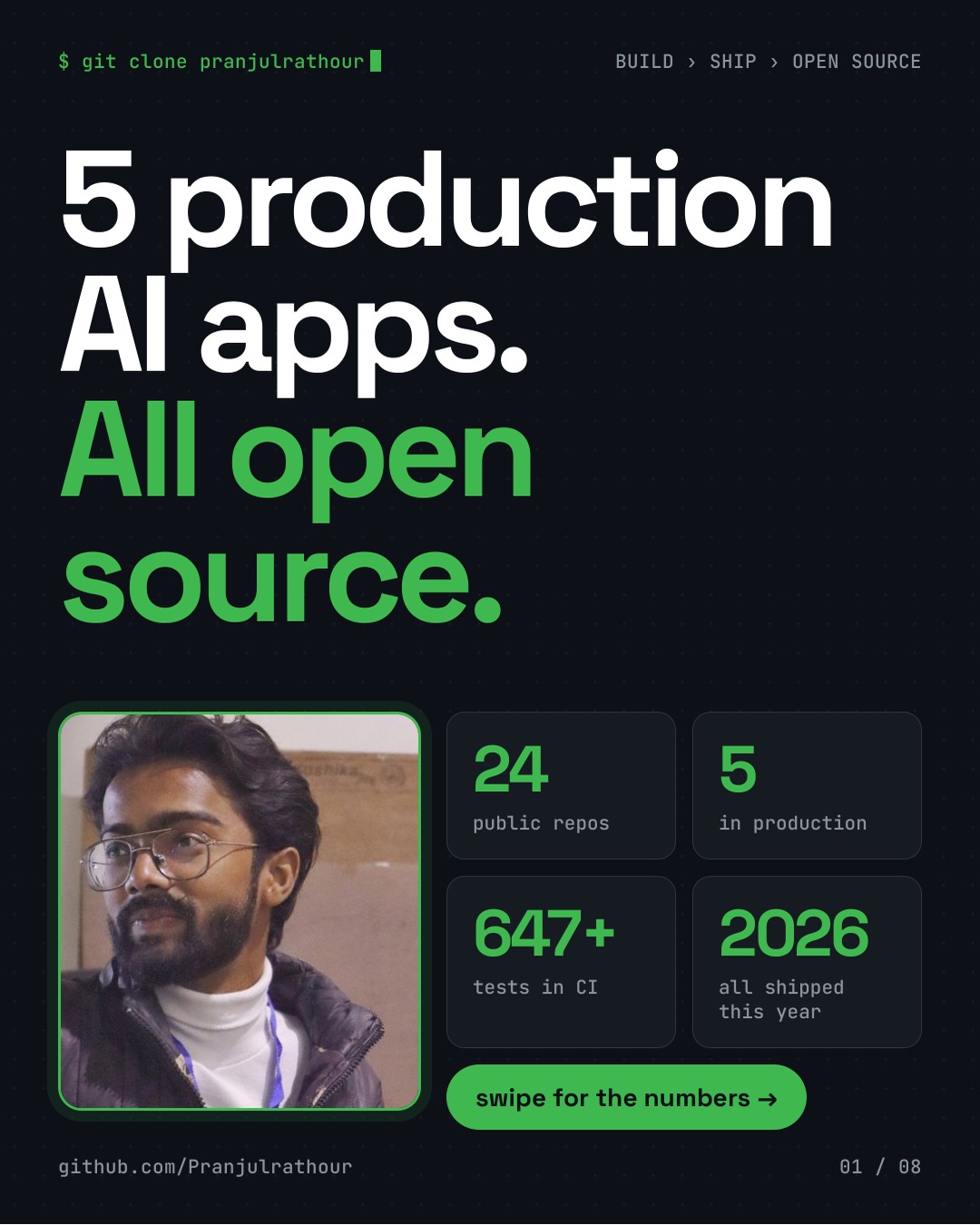
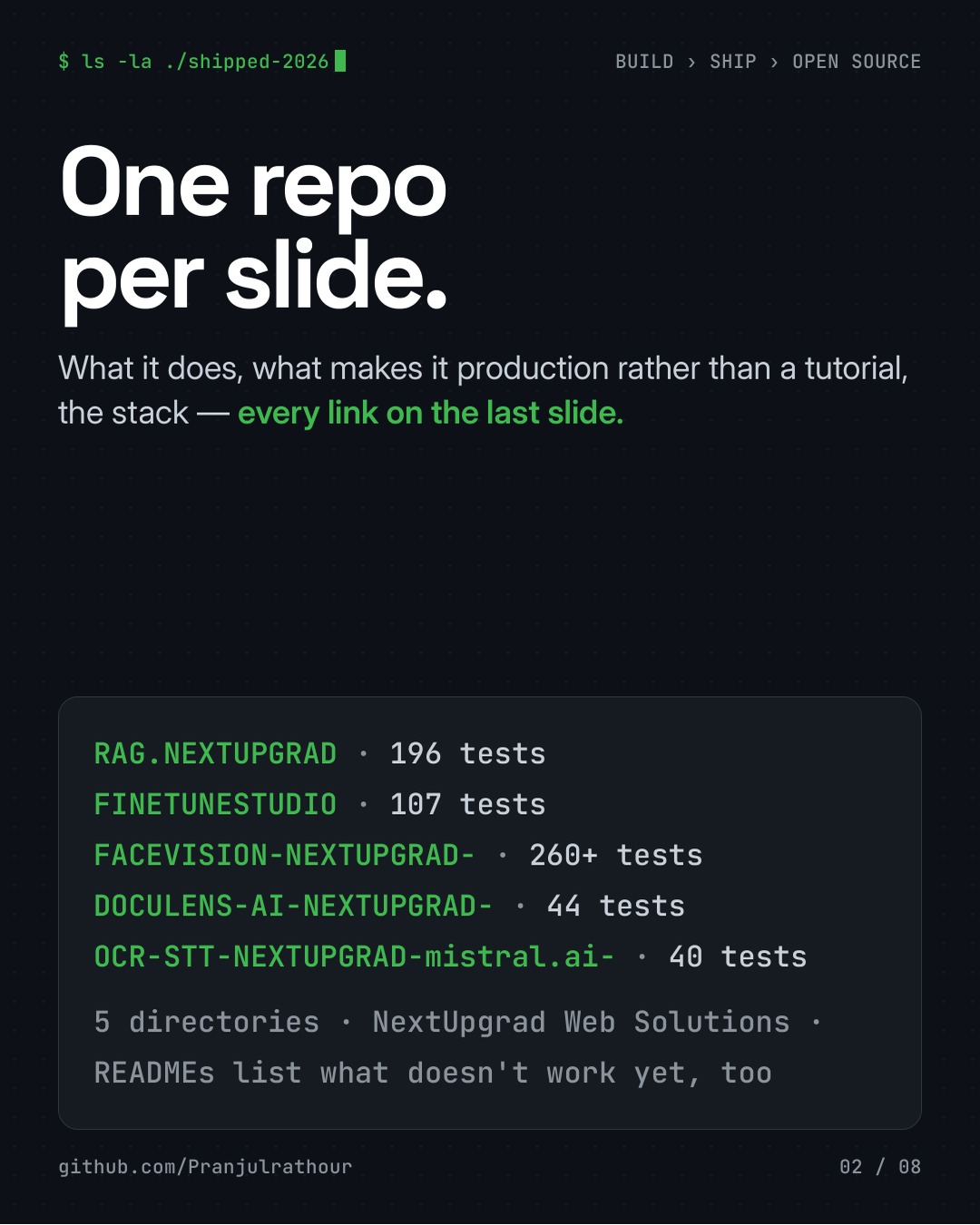
 | Pranjul Rathour GenAI engineer, Kanpur · 3x first-prize hackathon winner · campus mentor I ship production RAG pipelines, fine-tune LLMs and build agentic AI products end to end. I lead engineering at SCULT INDIA for a 14-member team and have mentored 200+ students through TechVerse Enclave. Open to: GenAI roles, hackathon judging, mentorship sessions and guest talks at colleges. Email: pranjulrathour41@gmail.com |
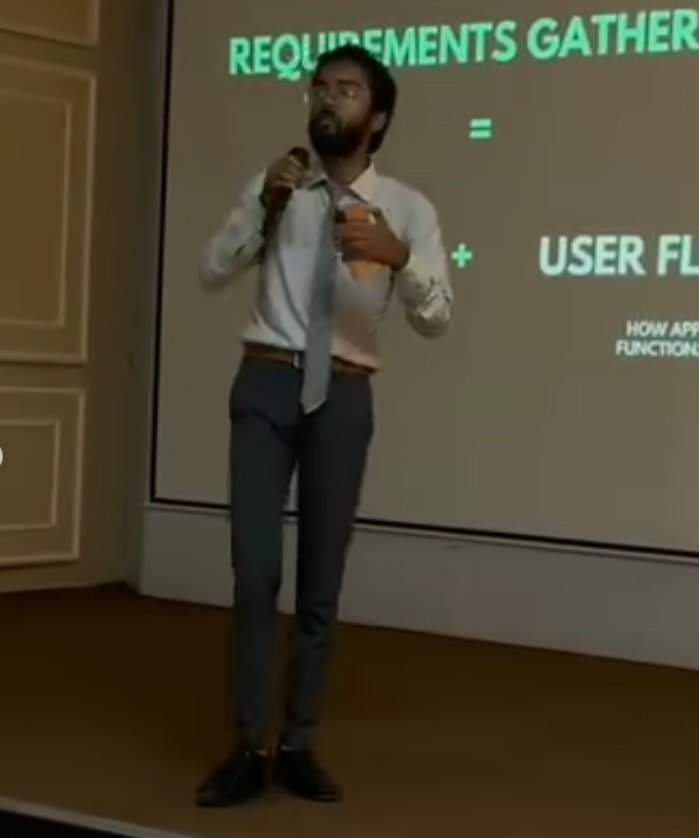 Requirements gathering and user flows, on stage | 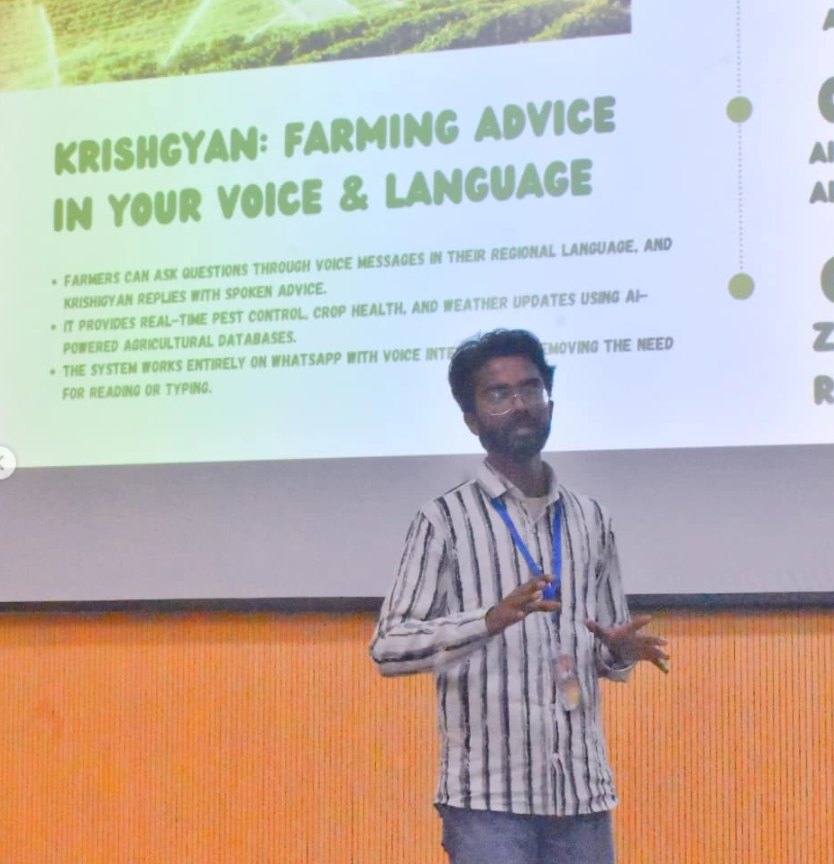 Presenting KrishGyan, farming advice in your voice and language |  Taking questions during a session |


Comments
Post a Comment