A RAG project for your college: notes, syllabus and PYQs you can actually query
Originally published at https://pranjulrathour.scult.in/blog/rag-for-college-documents-project-idea. That copy is the canonical version and gets updates first.
When students ask me for a RAG project idea that is not "chat with a PDF", I point them at their own college: scattered notes, a syllabus PDF nobody reads, previous-year question papers in WhatsApp groups. A retrieval assistant over that corpus solves a real problem for real users you can interview — which is exactly what recruiters want to see.
Scope it to one department
Pick one semester of one course. Collect the syllabus, faculty notes (with permission), textbook chapter summaries you write yourself, and five years of question papers. A few hundred pages is plenty. Scoping small lets you finish, evaluate and iterate; a whole-university corpus is a thesis, not a project.
Architecture that will impress in an interview
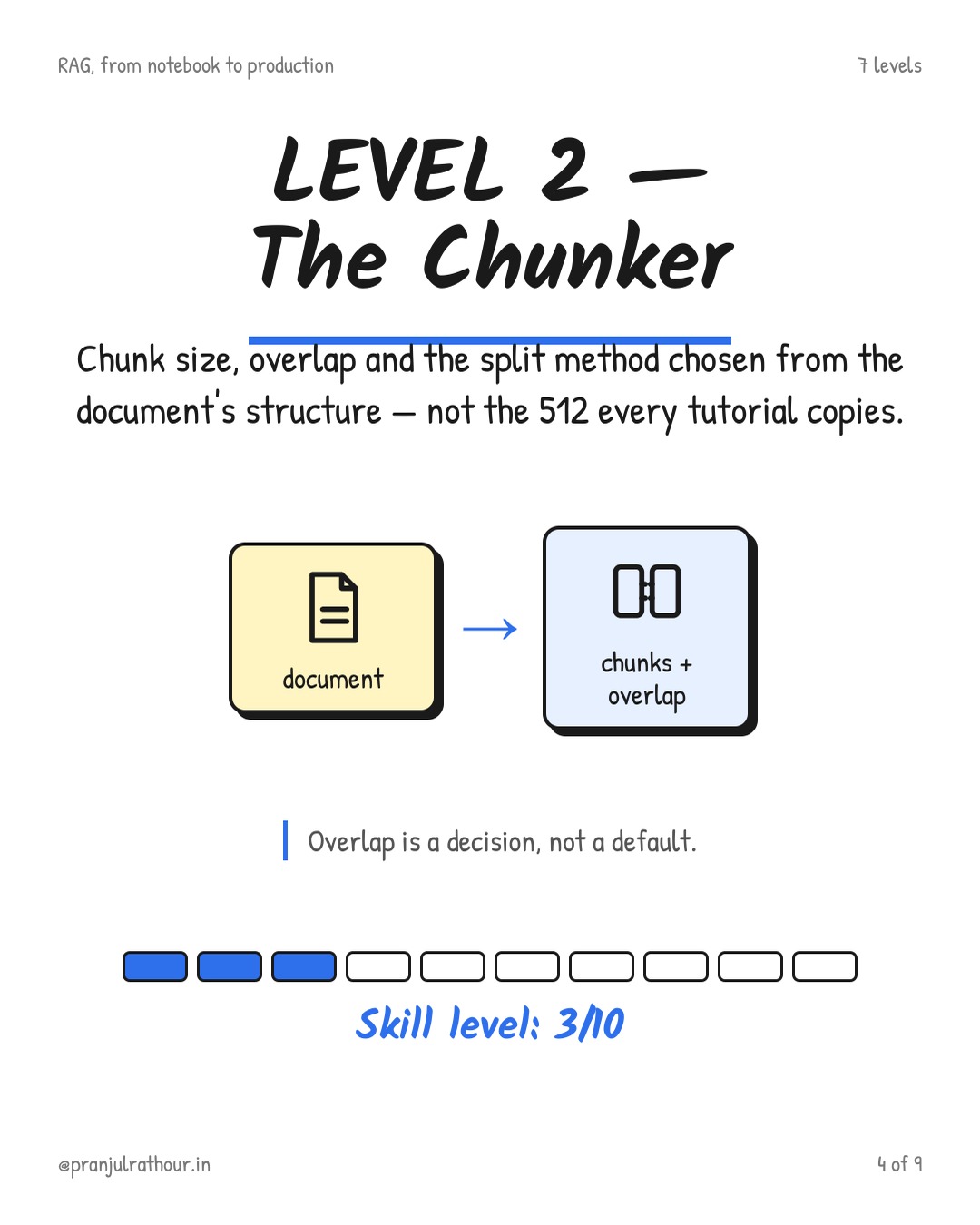
- Ingest with structure: detect unit headings and question numbers; keep page and source metadata (see chunking strategies).
- Hybrid retrieval: dense embeddings plus BM25, because students search for exact terms like "Dijkstra" or "unit 3".
- A reranker and a confidence gate, so the assistant refuses when the syllabus does not cover a question.
- Citations to page and source, so a student can open the note it came from.
- A FastAPI backend with streaming, and a simple Next.js front end.
Features users will actually use
- "Which units have appeared most in the last five years?" — answered from question-paper metadata, not the LLM's imagination.
- "Explain this topic using our notes" — grounded explanation with page references.
- "Generate a practice set for unit 2" — from real past questions, labelled by year.
How to evaluate and present it
Write 50 questions with known answers and measure recall and faithfulness the way I describe in how to evaluate a RAG system. Then put it in front of ten classmates for a week and record what they asked. In the interview, talk about the questions it refused and why — that is where you show judgement. Publish the repository with a README that leads with the evaluation numbers, not the tech stack.
This is the project I would want to see from a final-year student applying for a GenAI role: a real corpus, real users, and the honesty to show where it fails.
 | Pranjul Rathour GenAI engineer, Kanpur · 3x first-prize hackathon winner · campus mentor I ship production RAG pipelines, fine-tune LLMs and build agentic AI products end to end. I lead engineering at SCULT INDIA for a 14-member team and have mentored 200+ students through TechVerse Enclave. Open to: GenAI roles, hackathon judging, mentorship sessions and guest talks at colleges. Email: pranjulrathour41@gmail.com |
 Presenting to a room |  Pranjul Rathour |  Pranjul Rathour, GenAI engineer, Kanpur |


Comments
Post a Comment